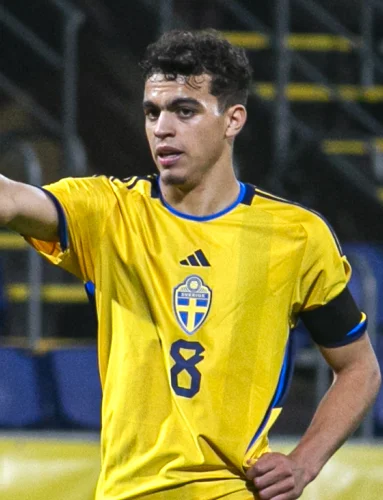
🇳🇱Netherlandsvs🇸🇪Sweden
Netherlands arrive with **7 points from 3 group games, 9-4 goal difference, 2.60 xG vs Sweden in their 5-1 win and 50.9% average possession over the last three matches**, while Sweden’s form is volatile (4 points, 7-7 goals, xG 1.01 in that same 5-1 loss, only 3 “big chances” created to Netherlands’ 16 shots). Tactical clash is a likely **Netherlands 4-3-3/4-2-3-1 high press and vertical transitions** against Sweden’s **Potter-style 4-2-3-1/4-3-3 with more patient buildup and wide overloads**, with the first meeting showing Netherlands turning near parity in possession (50.9–49.1) into a huge efficiency gap (xG 2.60–1.01, shots on target 10–9 but five Dutch goals). Key matchup 1 is **Brian Brobbey and Donyell Malen vs Sweden’s centre-backs**, after Brobbey’s brace in 17 minutes made him the fastest Dutch player to score two in a World Cup game, leveraging his box presence (2 goals from 3 shots, 20 Dutch touches in Sweden’s box) against a defense that conceded 5 goals and 3 “big chances” in that fixture. Key matchup 2 is **Benjamin Nygren / Viktor Gyökeres vs Jan Paul van Hecke and the Dutch high line**, with Sweden posting 16 shots and 9 on target in the 5-1 defeat but converting only once through Anthony Elanga; the question is whether Nygren’s creative output and Gyökeres’ shot volume can lift Sweden’s conversion rate from 1 goal on 1.01 xG to closer to their 5-1 win over Tunisia. Set pieces and pressing favor the Netherlands, who produced 3 big chances and repeatedly forced Sweden into turnovers leading to Cody Gakpo’s brace and Crysencio Summerville’s late goal, while Sweden’s three yellow cards in that match underline how often they were late to Dutch rotations and counter-press triggers. Head-to-head, the fresh 5-1 result (Brobbey 2, Gakpo 2, Summerville 1, Elanga 1) plus Netherlands’ stronger underlying numbers (FIFA rank 8 vs Sweden’s 38, group goal difference +5 vs 0) suggest that **chance quality, box occupation, and Sweden’s ability to withstand early Dutch pressure in the first 20 minutes statistically will decide whether the 55% Netherlands edge in the market is realized**.